

Do we agree on these?
From Mary Gentile: Finding Common Ground Without Compromising Your Values.
Mary C. Gentile is the creator and director of Giving Voice To Values, and author of Giving Voice To Values: How To Speak Your Mind When You Know What’s Right (Yale University Press). Giving Voice to Values (GVV) is based at University of Virginia-Darden School of Business. It was first launched by Aspen Institute as Incubator & Founding Partner with Yale School of Management, then supported at Babson College 2009-16.
In case you missed it, check out Mary’s first piece for The Renovator:
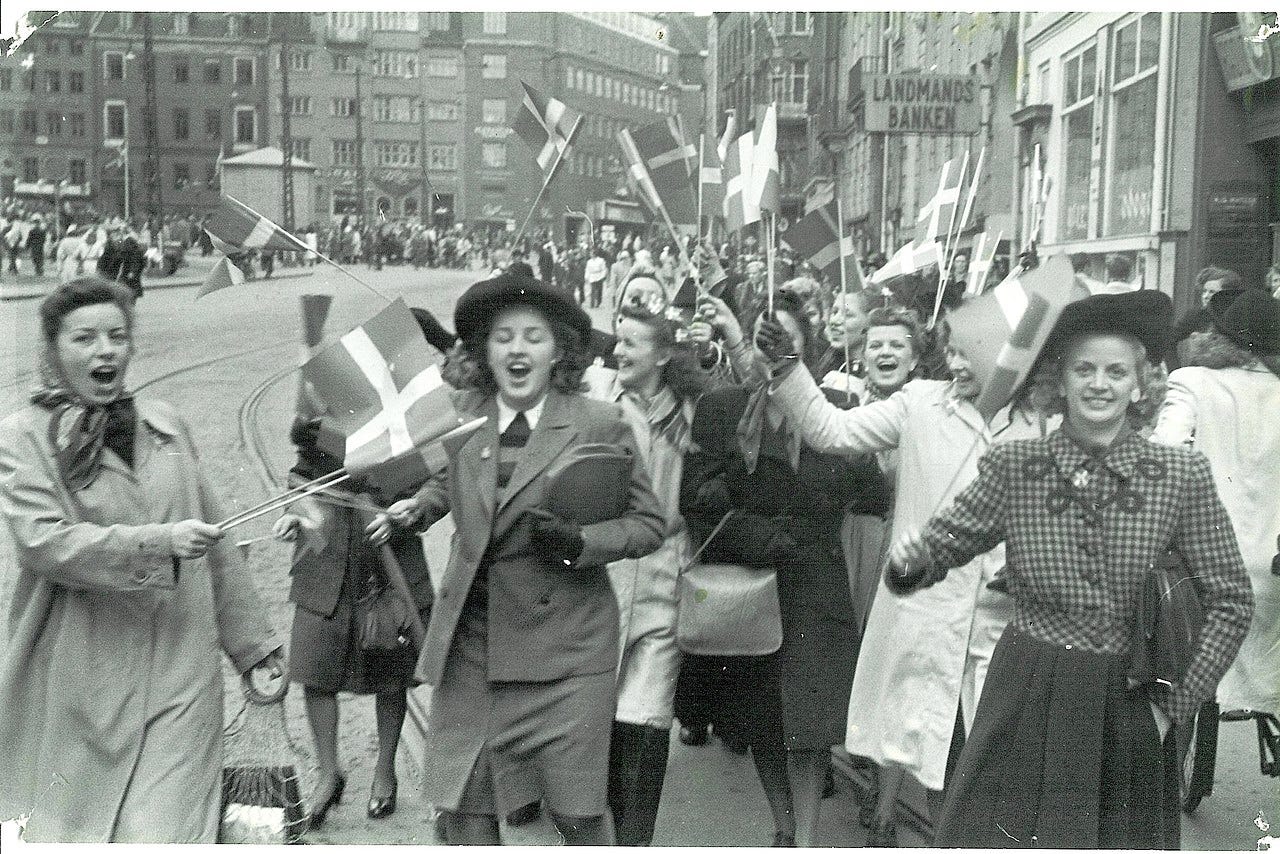
Recently I read an essay by Sarah Sophie Flicker in The Nation, titled “The Danes Resisted Fascism, and So Can We.” The piece describes the civilian resistance by the Danish people in the ‘40s that eventually turned back Nazi rule and, in some astonishing circumstances, actually moved some occupiers to change their stance. This resistance took many forms, depending on the roles, capacities, and leverage of different actors. The important thing was that they acted in any way they could and that they did so in sufficient numbers and in sufficiently visible ways, such that the occupiers were revealed to be impotent when it came to changing minds and hearts.
This, of course, brought me back to my own continual self-inquiry concerning the question: “But what can I do about the challenges facing my own country?”
Given my life’s work — creating and sharing an innovative pedagogical approach to values-driven leadership called “Giving Voice To Values” (GVV) (you can read the story of GVV here in a previous post for The Renovator) — it feels somewhat hypocritical to claim that I cannot find a way to act in the service of my values as our nation and our world face so many crises. Of course, the focus of my work, originally, was restricted to business ethics and business education where I spent most of my professional career. But this seems a thin and insufficient excuse for refraining from today’s challenges. And so I keep trying.
Temperamentally, I am more of a bridge builder than a flame thrower, and I do believe that this somewhat calmer approach can be very effective. One of the lessons of my work with “Giving Voice To Values” is that we are often more likely to act and even to be effective if we play to our individual strengths. That is not to say that there are not times when acting “against type” may be required – when stakes are so high and/or time is so short that the introverted, risk-averse individual must stand up and shout, or the risk-taking extrovert must reach out with patience and listening. In fact, acting “against type” in such situations may even be more impactful simply because it comes as a surprise.
However, in general, we are most likely to act in ways that are amenable to our particular style of voice and action. And it is that insight that made the Danish examples in Flicker’s essay so resonant to me. A passage that especially stood out:
“The Danes used empathy politically—an action abhorred by right-wing leaders, who have gone so far as to brand it as an enemy and a weakness. But what they are leaving unsaid is that fascism cannot prosper where empathy exists.”
Flicker explains that:
“The Danes’ unified refusal to indulge hate and their insistence that there was no ‘Jewish question’ overtook their more powerful opponent, dashing their plans and even changing some of the German occupiers’ mindsets, standing in stark contrast to the compliance of most other European countries.”
Flicker notes that the Danish refusal to villainize Jews meant that the Nazi narrative could not take hold with them. She describes Danes’ use of “empathy” as a way to hold onto their humanity toward their Jewish neighbors, a response we see today reflected in those citizens who defend their immigrant neighbors from deportation and arrest. These citizens are simply being “who they are” – that is, people who care about their neighbors.
.jpg)
But I think this empathy can operate in another way as well. It can trigger an expectation of humane behavior from those we see as oppressors. Flicker cites Hannah Arendt’s observation that “Denmark is the only case we know of in which the Nazis met with open native resistance, and the result seems to have been that those exposed to it changed their minds.... Their ‘toughness’ had melted like butter in the sun.”
This was compelling to me because it seemed to align with my own preferred and most comfortable approach. I am prone to trying to find the places where I can agree with or at least understand others, by trying to see where they are coming from – that is, to utilize empathy – and then to look for ways to validate any part of their views that I can agree with or at least sympathize with, while finding ways to share my own views, hopefully to a more receptive audience. Of course, the risk in this approach is that it can lead to suppressing my own views at times, or even cause me to doubt my own judgment (not always a bad thing). But in general my approach has served me well. I don’t suggest finding ways to agree with viewpoints that I find dangerous or inhumane, but rather to empathize with the needs, fears or concerns that may have brought another to their own stance, so as to better connect with them— and perhaps to reveal a dignified “off-ramp” to a changed point of view.
However, when confronting some of the most alarming positions that I see around me in today’s political landscape, and in particular in conversation with those who hold those positions, I find my own anger triggered. And I feel myself reaching for my strongest or even harshest arguments — sometimes expressed in extreme terms that are less than totally accurate — in an effort to push back against positions that threaten or appall me. I leave my best skills and any empathy behind and resort to anger and a more aggressive posture — stances that do not play to my strengths and that leave me feeling agitated and less powerful. It’s as if I feel a need, a pressure even, to immediately erase the positions that I find cruel or inhumane or undemocratic or just simply untrue. It’s as if letting them rest in the air, for even a moment, feels like a threat or an acceptance — an abdication of my own truth and my own values. Although such intense feelings may sometimes be motivating, too often this sense of urgency disarms me, leaving me both agitated and ineffective.
It’s as if all the lessons of my career abandon me at the moment when they are most needed. I have been struggling with this tendency. And of course, I recognize that my responses are not those of everyone. There are many who find their righteous anger to be fueling and who use it quite skillfully and powerfully. But for those who tend to respond as I do, I want to explore possible useful strategies.
Coincidentally and fortuitously, I read Flicker’s essay shortly after a visit with my family who live in a different state and who (mostly) hold political and religious views quite different from my own. They are lifelong Republicans and what I like to call “super-Catholics.” I, on the other hand, am a Democrat and an atheist. Nevertheless, we were raised in the same family, and I believe I share many fundamental values with my two sisters and their respective spouses, children, and grandchildren. Yet during my visits with them, I find myself pulled between two reactionary — and equally unsatisfactory — poles. I either avoid topics we disagree on and remain mute when they come up, or I react with a blazing anger, even contempt. Neither represents my values, neither makes me feel better or stronger, and neither leads to mutual learning or understanding.
In response to this failure, I turned to my own work with GVV. What lessons can I draw upon in these difficult exchanges? I already mentioned the idea of playing to one’s strengths. But the core idea behind GVV is that we are more likely to voice and act on our values if we have rehearsed, even pre-scripted. Also, we are more likely to be effective if we frame challenges in ways that not only play to our own strengths but also are mindful and responsive to the stakes for our listeners. The idea is not to give up my views and values or “water them down,” but rather to work with others to find the places where we share values and build on those.
I began to develop a taxonomy of the values that I believe I share with my family, and hopefully with many others who have taken very different political positions from me. My hope is that by articulating and building upon this list, I can find a way — my way — to use empathy to connect with and potentially influence those who seem ideologically worlds away. My plan is to generate this list, along with some ideas about how best to communicate about them and some reflection questions, and then to share this with my family, inviting a conversation. I hope that this may unlock more and better communication.
One more important point: I am not suggesting that strong resistance in the face of challenges to our democracy, our environment and our humanity is not important or necessary. It is! And there are those with whom I believe I truly do not have much common ground at all. But there are many with whom I believe there can be enough of that common ground to find ways to work together toward a better future.
We will disagree about methods and policies, but I believe we can agree upon a respect for our shared humanity and worth — an agreement that will enable us to work together. And at a minimum, this respect should allow us to value each other’s lives; to sometimes disagree fiercely about methods, but to still acknowledge the worth and value of the lives of those with whom we disagree.
Values That (I think) We Share
The Value of Life Itself
Although we disagree upon specific issues — abortion rights, the value of vaccines, the role of immigrants in our country, etc. — we agree that life is a gift to be respected, treasured, and protected. We may disagree about when this life begins, but can we agree to value an expectant mother’s life? We may disagree about how best to protect health when faced with a pandemic, but can we agree that medical treatments should be based on strong evidence and data, and health recommendations should come from experienced, respected professionals?
We may disagree about the appropriate role of immigrants in this nation, but can we agree that all persons deserve to be treated humanely and justly, to receive due process, and that children should not be separated from their families and sent to foreign countries without recourse and records?
Can we agree that we share a desire and commitment to valuing and respecting life, despite our differences on how to achieve that commitment? Can we recognize and respect that desire in each of us? And then look for ways to understand where our different views come from, the knowledge and/or faiths that they are based upon, and finally work together to find paths forward that encourage the best for all of us – even if that means allowing others to live differently than ourselves in some ways?
Equal Rights
Just as we agree that we value and respect life itself, we agree that our country is founded on principles of “equal rights” for all people. We agree that the United States has never fully achieved this principle but it is a commitment toward which we must continue to strive. We agree that citizens and noncitizens alike are entitled to due process, to respect, to humane treatment. We don’t have to agree to accept everyone’s views but we agree that they have the right to hold them. And we don’t have to agree to approve of everyone’s behavior, but we agree that actions to curtail those behaviors must be guided by the law and a commitment to humane treatment.
Free Speech
We agree that we all have the right to think and express our viewpoints – as long as their expression does not endanger others (e.g., “Don’t shout ‘Fire!’ in a crowded theater”) – but that right comes along with the responsibility to think carefully about our views, to test them before spreading them. And we recognize that others have the right and even the responsibility not only to express their own views but also to test, confirm or disconfirm and respond to our views. This includes the rights of whistle-blowers to share credible reports, without retaliation, as they are often the only way to provide a check on power.
The Rule of Law
We agree that respect for the law is necessary for our society to function in a coherent, safe and equitable manner. Although we may not always think that our laws are sufficient or even appropriate, we agree that a lawful approach to changing or correcting laws that may be flawed is important (e.g., legal appeals, legislative reforms, voting). And we agree that the rule of law should be respected, even as we may work to change individual laws. And this would include respecting due process for all individuals, whether they are eventually found guilty of crimes or not. We agree that this respect for due process – in the end – protects us all.
Democracy
We agree that a democratic approach to governance is good and necessary, and that people should not be prevented from voting. Lawful voting should not be discouraged or made more difficult, and lawful votes should be counted. Efforts to encourage voting and to make lawful voting easier should be undertaken. And we understand and accept that sometimes our preferred candidates or policies may not prevail in a lawful election.
Also, we agree that the separation of powers outlined in our nation’s Constitution serves a critical purpose and must be respected. Consolidating power in one branch of the government leads to authoritarianism – the antithesis of democracy.
Truth
We agree that there is a difference between truth and falsehood, fact and opinion, fact and myth, reality and conspiracy. Just because someone believes something to be true does not make it so. And we agree that we have a responsibility to find, confirm, reveal and share truth — whether that is found in evidence-based scientific, medical and historical knowledge and research or whether it is found in honest and complete and unbiased journalism. We recognize the great power of social media, of art, of public discourse and we agree that we have the obligation to use these tools with integrity and care. We all recognize that we can be biased or fooled by anecdotes, algorithms, or misinformation on social media, and that we need to think critically about what we’re seeing – or what we’re not seeing. And we agree that it is important and essential to educate ourselves and our fellows to distinguish misinformation from fact.
We value reflective patriotism and an honest engagement with our country’s history even when it reveals our mistakes and transgressions, whether that is slavery or internment camps or corruption, because that honest engagement is what enables us to learn and avoid future mistakes.
And we recognize that a commitment to free speech does not mean that any idea is as valid or true as any other; rather, it is a recognition that we have a right to think and express our viewpoints but that we should take responsibility for testing those views before we spread them.
This is the beginning of a list of values that I think we share. My questions for my family are:
Do you share these values with me?
If yes, can we talk about them and consider ways to understand the places where we differ and why? And perhaps come to some agreements, but at least find ways to value each other’s lives despite those differences?
If no, can we talk about why you don’t agree that we share these fundamental values and see if clarifications will move us closer? And again, at least find ways to value each other’s lives and right to differ?
Are there other shared values that you would suggest adding to this list? Can we discuss those?
Does recognizing these shared values help us to find ways to disagree more productively when we differ?
My hope is to use this list myself to build a “muscle memory” of returning to these core values instead of resorting to anger or silence, and I hope this may be useful to you as well.
I love the content of this article and will do my best to internalize these ideas and put them to use. I also read The Nation article about the Danes' resistance in WWII which was referenced. I have one serious, nagging concern about the difference between WWII Denmark and 2025 USA. What would have happened in Denmark if 30-40% of Danes had welcomed the Nazis as "saviors"? Based on voting patterns and polling, it sure seems like 30-40% of Americans approve of what our government is doing today. Could the tactics described about Denmark have possibly worked in that case? For every 6-7 resisters to the Nazis there might have been 3-4 collaborators. I feel that's a problem we face in America today.
This is an outstanding piece! Consistent with everything in it and consistent with the desire to help bring peace, may I respectfully recommend some refinements in the thinking behind this piece? We all should be able to agree that carefully considering and giving effect to our Constitution is simultaneously very conservative and very liberal and it powerfully promotes the rule of law, equal rights and the truth. One of the primary purposes of our constitution as one nation comprising one people and one of the primary purposes for which "We the People" wrote and ratified our Constitution "for ourselves" was to make radically liberal truths become the new conservative rule of law.
Democracy is a word we love, but it's not what we really have. Democracy is not even what we really do want or what we really should want. Isn't "democracy" (just like "monarchy," "aristocracy" or "oligarchy") most fundamentally, merely a label used to identify the part of society that wields power? The Nineteenth Amendment and assertions about it illustrate the problem. The very reason the Nineteenth Amendment was needed in the first place was that the forces of "democracy" throughout our entire history to that point had denied (and for much history even after the Nineteenth Amendment they continued to deny) nearly all women much power to influence their self-government (by each woman over herself or by women over our public servants).
The truth is that insisting on democracy undermines the truth, equal rights and the rule of law. Such insistence blinds people to the truth, including about equal rights and the rule of law. Our Constitution states the rule of law in the U.S. and it states the most fundamental rules of law precisely to restrain abuses and usurpations of power, no matter who wields it.
Our written Constitution (establishing and stating the rule of law) repeatedly prohibited discrimination that certainly was democratic but equally certainly was contrary to our constitution as one nation of one people. That was the primary point of Amendments XIII through XV, XIX, XXIV and XXVI. The first paragraph of Amendment XIV elaborates on and more explicitly supports the first sentence of our Constitution. It states rules of law that expressly govern states because such rules of law already explicitly or implicitly governed our public servants in national government.
James Madison (rightly lauded as the Father of the Constitution and the Father of the Bill of Rights) emphasized in Federalist 47 that our written Constitution and our constitution of government are "a reflection on human nature" inasmuch as they employ "devices" that are "necessary to control the abuses of government." All "government itself," is "but the greatest of all reflections on human nature."
Madison emphasized the self-evident truth that "the preservation of liberty requires that" our Constitution prescribe how "power should be" divided and restrained. "The oracle who" was "always consulted and cited on this subject" from the 1760's through the 1780's was "the celebrated Montesquieu." Montesquieu in 1754 famously emphasized that "[t]here can be no liberty where the legislative and executive powers are united in the same person, or body of [people]," or, "if the power of judging be not separated from" both "the legislative and executive powers." So Madison (and many Americans) in the 1780's famously emphasized that "[t]he accumulation of all powers, legislative, executive, and judiciary, in the same hands, whether of one, a few, or many" is "the very definition of tyranny."
No matter who wields power or how great their number, the sad truth is all power is amenable to abuse and it will be abused. That sad, self-evident truth was understood by the people who wrote or ratified our Constitution, the Bill of Rights, the Reconstruction Amendments, Amendments XIX, XXIV and XXVI.
That truth is the reason Article VI expressly emphasizes that our Constitution established “the supreme Law of the Land” (i.e., the supreme law that governs all our public servants everywhere in the U.S.); it expressly emphasized that all “Judges in every State” are “bound” by “the supreme Law of the Land” (which was expressly limited to our “Constitution” as the paramount law and then federal “Laws” that were “made in Pursuance” of our Constitution and “all Treaties”); and it expressly emphasized that all legislators and “all executive and judicial Officers, both of the United States and of [all] States” are “bound” to “support [our] Constitution” in all official action.
That truth is the reason that the People in Article II prescribed the oath of office of all presidents and the actual words of every president before each president starts any term of office expressly emphasize that the foremost and constant duty of every president in all official action is to “preserve, protect and defend [our] Constitution.” That truth is the reason that the People further emphasized that "executive Power" means, to a great extent, the duty to “take Care that” all federal “Laws be faithfully executed.”
Our Constitution was carefully crafted to protect us from "tyranny" by prohibiting or preventing "[t]he accumulation of all powers, legislative, executive, and judiciary, in the same hands, whether of one, a few, or many" and by restraining the exercise of "all powers," regardless of whether they are "legislative, executive," or "judiciary."