

Lawmakers Finding a Way Forward
How Future Caucus is supporting next-gen legislators.

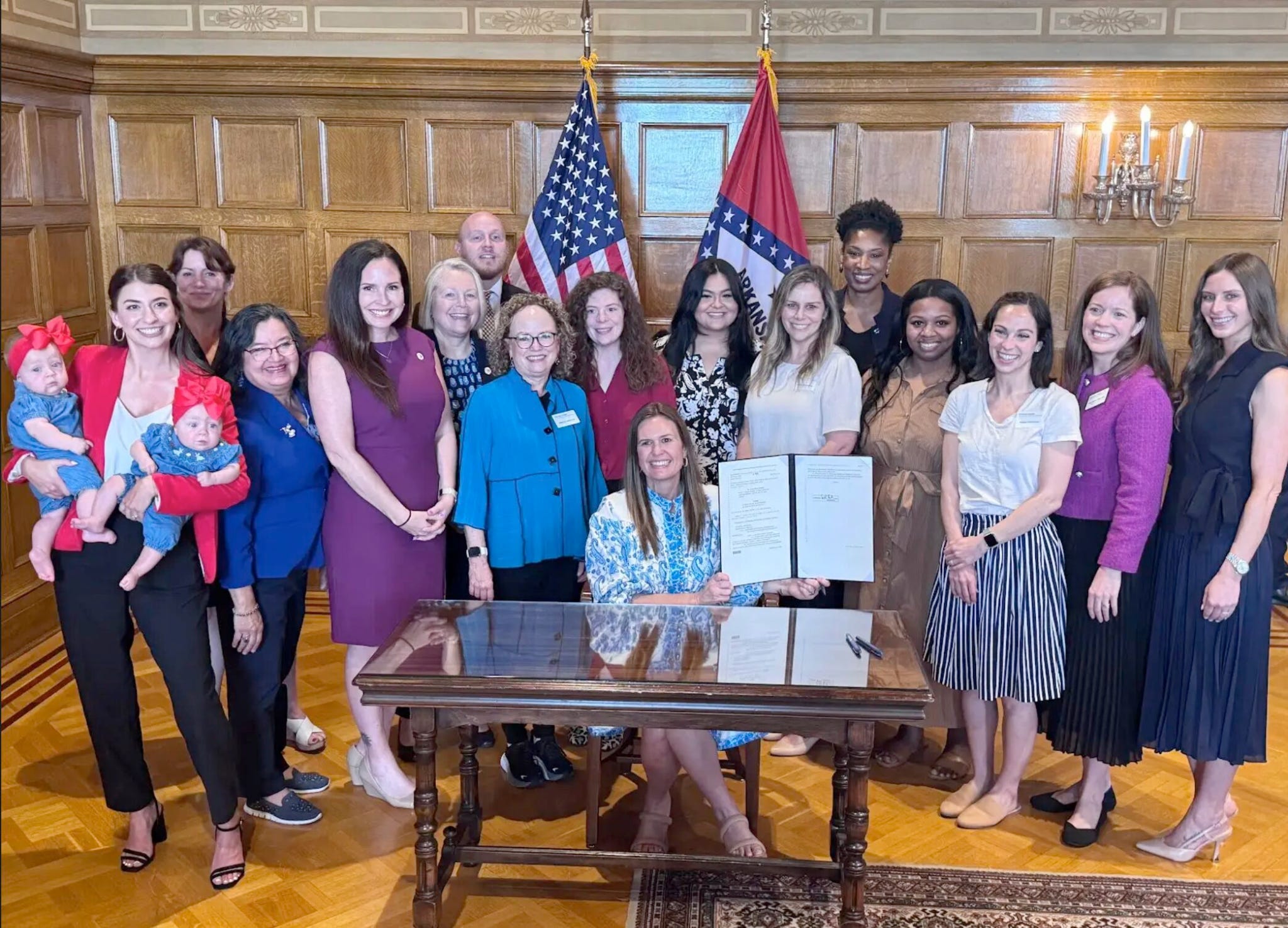
Arkansas is a tough state to have a baby. Compared to the rest of the country, statistics on maternal health and infant health have been poor. In the past, too many pregnant women weren’t getting the prenatal care they needed, especially in the rural areas, and prenatal care providers were going out of business at an alarming rate. But thanks to the Healthy Moms, Healthy Babies Act signed into law by Gov. Sarah Huckabee Sanders last year, the future looks brighter.
That legislation represented the culmination of work undertaken by Arkansas’ Future Caucus, a bipartisan coalition of young lawmakers who are breaking through partisan gridlock to make life better in their state.
In Arkansas, Reps. Aaron Pilkington (R-Knoxville) and Ashley Hudson (D-Little Rock) worked together to lead the way on the series of maternal health bills that eventually became the Healthy Moms, Healthy Babies Act. They’re part of a national movement of democracy renovators with Future Caucus, the national hub for Future Caucuses in each state.
As Future Caucus Innovation Fellows, Pilkington and Hudson developed the legislative package as their capstone project. They did extensive research, consulting with Medicaid administrators, social workers, advocates, scholars, and healthcare providers. Future Caucus helped out along the way by connecting them to experts and colleagues, from Arkansas and other states, who served as advisers. It also hosted the national Future Summit, where Pilkington and Hudson co-moderated an educational panel in 2024 about new maternal health technologies and embarked on the path that led to Healthy Moms, Healthy Babies.
All their capstone research went into the development of evidence-based, practical, and broadly appealing policies for maternal health. One piece of the law, for example, was a straightforward rule change: Instead of applying for Medicaid coverage and waiting for a decision before they could pay for healthcare, pregnant women were given presumptive eligibility while their applications were processed. That small, technical change would make a massive difference in people’s health. Another part of the law increased Medicaid reimbursements to prenatal care providers to help them cover costs and stay in business.
Future Caucus launched in 2013, and any legislator under 45 can join. (The group was originally called the Millennial Action Project, but now it is welcoming in Gen Z lawmakers, too).
Members like Pilkington and Hudson didn’t run for office to parrot party lines or to score clicks by demonizing colleagues across the aisle. They also didn’t run to practice bipartisanship for its own sake. They ran to make things better for their communities, and that’s what drew them to Future Caucus.
Each state’s Caucus is co-chaired by one Republican and one Democrat. What makes the risk of reaching across the aisle worthwhile? Often, it’s an issue that has personal relevance to each lawmaker. Hudson grew up in a part of Illinois with a high rate of teen pregnancy, and she’s passionate about supporting maternal health with holistic policies. Pilkington, a father of four, believes that a “pro-life” party should do all it can to support expectant and new mothers.
Because they’re parents of young children, the high costs of prenatal care, delivery, and childcare are personally relevant to many members of Future Caucus and their friends and peers. That is an area of genuine common ground. Lawmakers from 13 other states traveled to Arkansas for a Prenatal-to-Three Innovation meeting last October to learn how they could support maternal health for their own constituents, too – Maryland Rep. Jennifer White Holland posted to Instagram a few weeks ago about her success introducing a maternal health bill as a Prenatal-to-Three Innovation Fellow.
Future Caucus Policy Innovation Lab Senior Director Paige Ferguson says that the Arkansas maternal health law is the crowning glory of her work – at least, so far. It represents a huge investment in maternal health that will save lives and protect generations. At the same time, it’s a great example showing that meaningful bipartisan work is still possible in our climate of polarization.
Set up to connect lawmakers with one another and with the sort of experts they need to write effective policy, the Policy Innovation Lab is a relatively new addition to Future Caucus. The lab hosts Future Caucus’s Innovation Agenda, a policy menu that helps members share good ideas and keep track of what others are working on. Convenings are an opportunity to build relationships, find support (legislative or moral), and re-orient from the day-to-day wrangling of legislative work or putting out fires to thinking long term about the future they’re trying to build.
The key, says Ferguson, is focusing on these issue areas of shared concern — and to be open to unexpected partnerships. Many Future Caucus members are frustrated with the high costs, both financial and social, of the criminal justice system. Many are eager to address the crises of housing affordability, food insecurity, and under-resourced schools. They know their communities are struggling, and they’re open to working with strange bedfellows if it means, as one blunt Future Caucus slogan puts it, they can “get s--- done.” One promising new task force will work on AI regulation and workforce development – a good task for young lawmakers who are more familiar with this technology than many of their senior colleagues. Beyond policy issues, lawmakers also struggle with the pressures and toxic climate of politics, including threats to themselves or their families. The support of the Future Caucus member community helps effective young lawmakers stay in public service.
This is not easy work. But Future Caucus is helping young lawmakers do what they set out to do — and find meaning in achieving a positive impact. Members are taking on issues connected to their own lives and those of the young people they represent. Last year alone, members passed 2,698 bills. Hopefully, that means that our state and national legislatures are going to be in good hands as a new generation steps up to innovate and lead.
Members like Pilkington and Hudson didn’t run for office to parrot party lines or to score clicks by demonizing colleagues across the aisle. They also didn’t run to practice bipartisanship for its own sake. They ran to make things better for their communities, and that’s what drew them to Future Caucus.
Very inspiring, but it is a program that discriminates on the basis of age. Age discrimination was once ubiquitous in the U.S. It is gradually becoming passé and delegitimized. As Future Caucus illustrates, though, it ain’t dead yet. So, what is the legitimizer in this case? Is it that legislators under 45 are victims of discrimination who deserve reparations? Whatever it is, the reason deserves a place in this article if the general rule is that legislators of every category can learn and practice collaboration for the public good.